
Integrating 100% touchless handling from finished case to freezer storage with complete automation.
Engineering uninterrupted product flow between distant facility zones for a projected 35% throughput boost.
Project Summary
By fully integrating conveyor controls and mechanical routes across case handling, robotic palletizing, and pallet wrapping, AEC established a streamlined, touchless path from finished production directly to freezer storage for a projected 35% increase in end-of-line throughput.

Industry Operation
High-volume frozen food production, case handling, and cold-chain distribution logistics.

Key Technologies
Hytrol overhead case and pallet conveyors, six Ryson vertical spiral conveyors, robotic palletizing equipment, automatic stretch wrapping systems, and integrated system controls.

Success Impact
Upgrade to 100% touchless case handling, 75% increase in floor space, and projected 35% throughput increase.
Continuous case-to-freezer conveying for high-volume processing.
AEC’s Engineer & Material Handling Specialist, Brad Pearson, integrated a high-volume frozen food upgrade by connecting production to cold storage via Hytrol overhead case and pallet conveyors and six Ryson vertical spirals.
By linking line-speed transport directly to robotic palletizing and automatic stretch wrapping, the turnkey system cleared material handling bottlenecks and ensured continuous, hands-off prep for freezer storage with a projected 35% throughput increase.
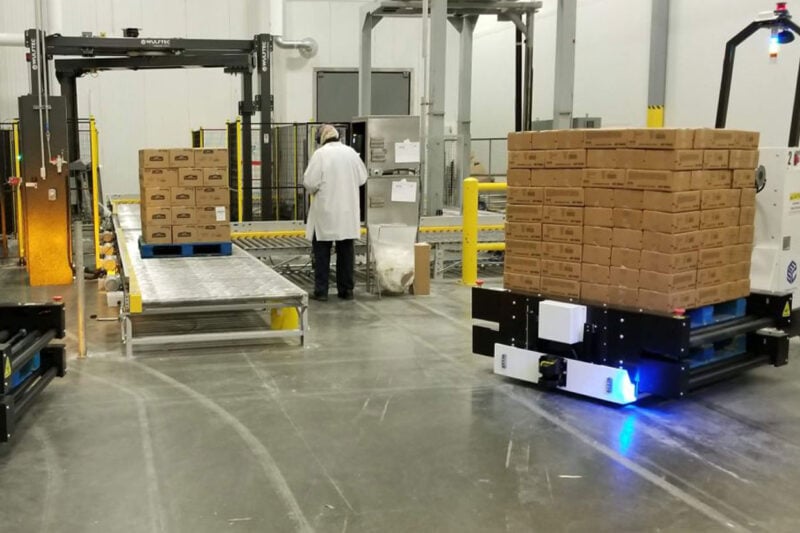
Challenge: How to move finished product beyond the production building.
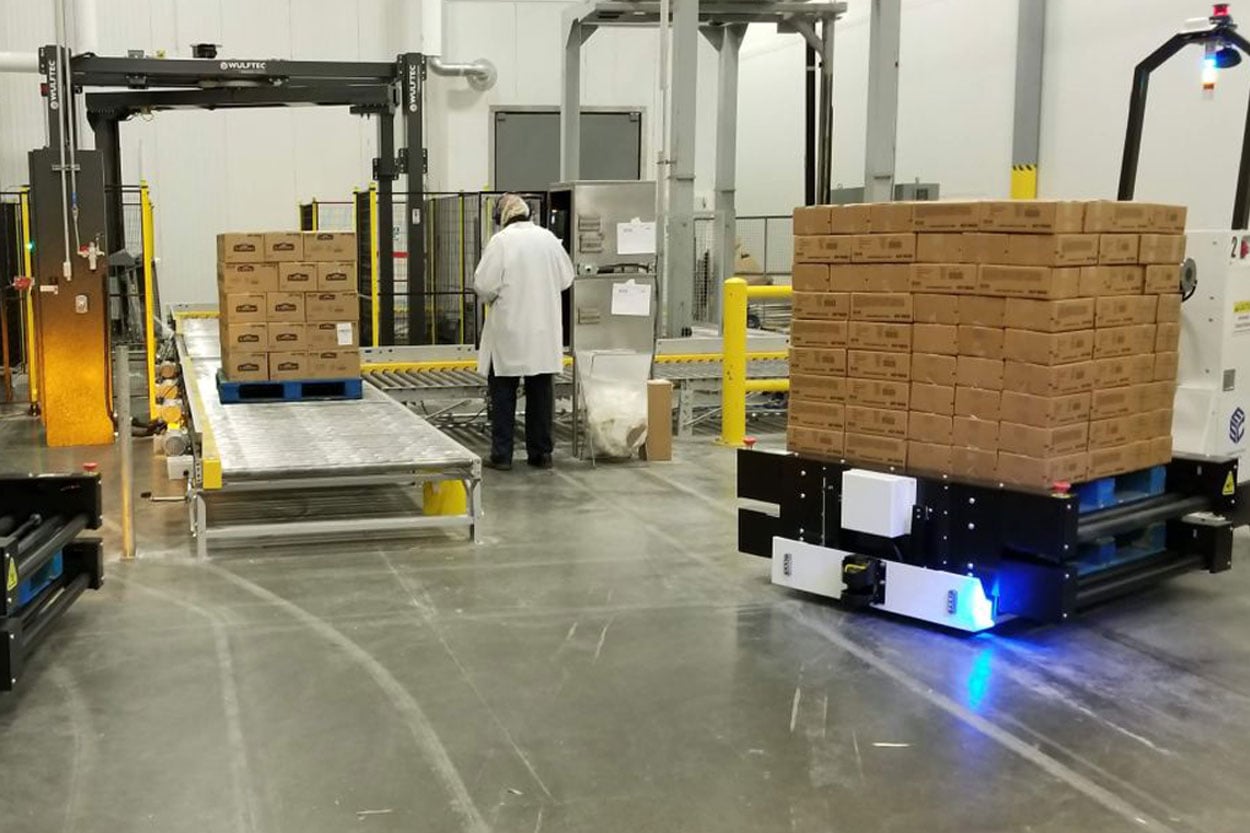
A new production building gave a high-volume frozen food facility a substantial material handling challenge. The facility needed a handling system that connected new production capacity with the operations that followed it. Finished cases had to travel a long distance overhead before reaching the robotic palletizers. Once the robots built the loads, completed pallets needed a defined route through wrapping and onward toward frozen storage.
The project involved the transition from case conveying to robotic palletizing and the subsequent movement of full pallet loads. AEC’s conveyor and integration work connected these handling stages into a single automated system.
When expanding production, it pays to map those transitions early. Where you place the palletizer dictates your entire case conveyor path, just as pallet discharge and wrapping specs dictate your downstream footprint. Planning around the complete product journey ensures finished goods move smoothly through every handoff without triggering new bottlenecks down the line.
Solution: Designing an integrated overhead and vertical conveyor route.
To bridge the physical distance between the new production building and cold storage, Brad Pearson engineered an end-to-end material handling system combining elevated horizontal conveyance, vertical spiral elevation, robotic integration, and system-wide controls.
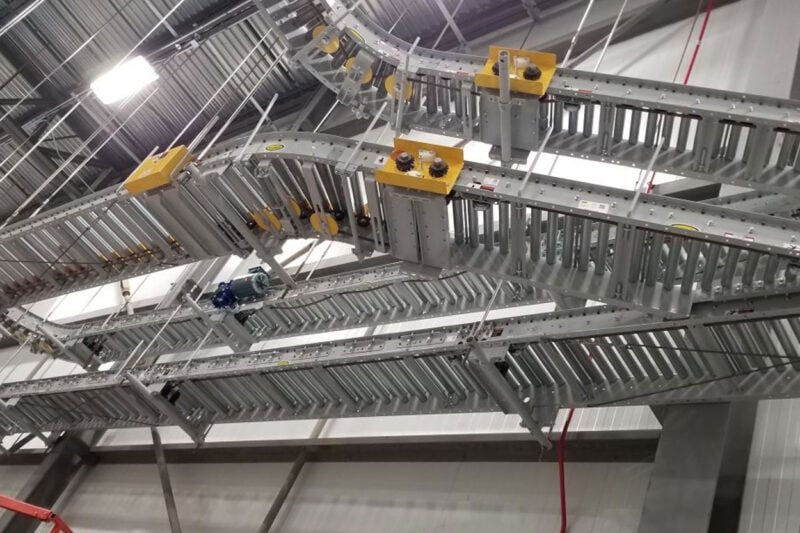
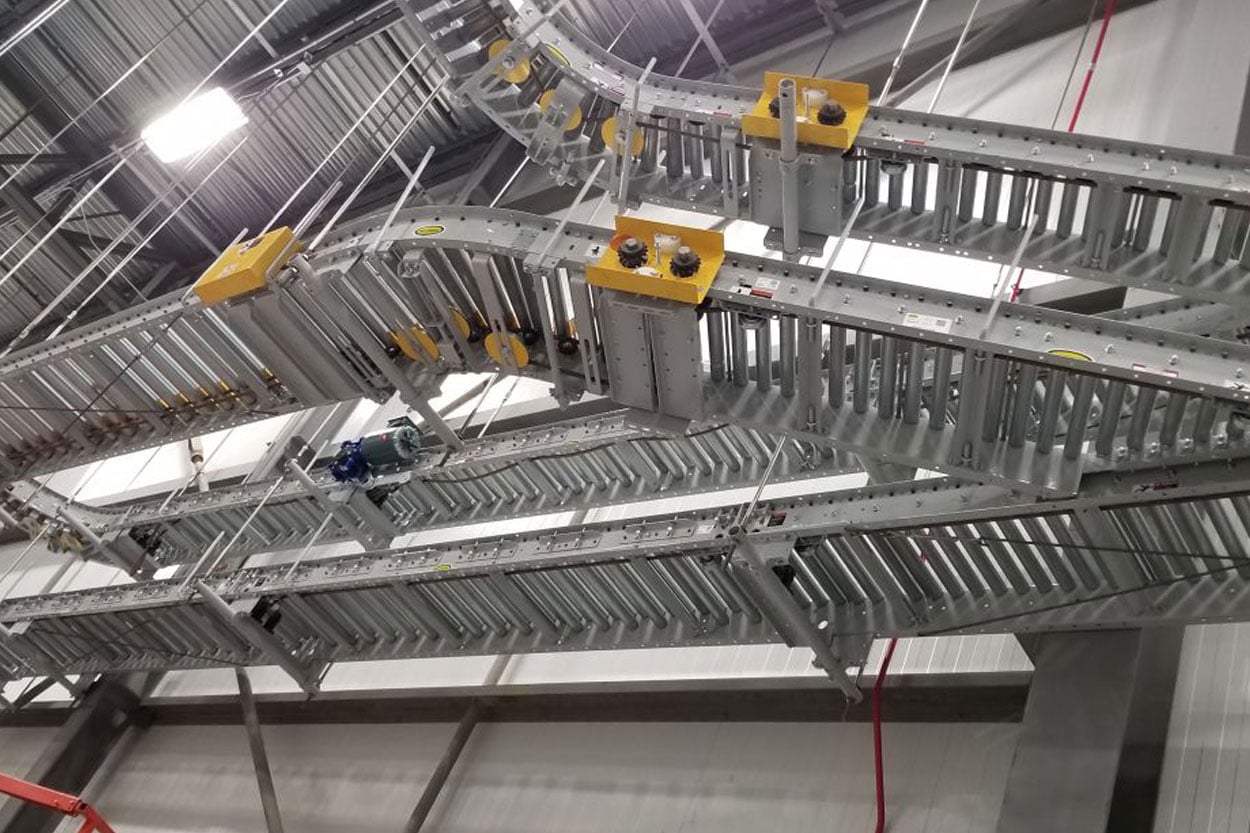
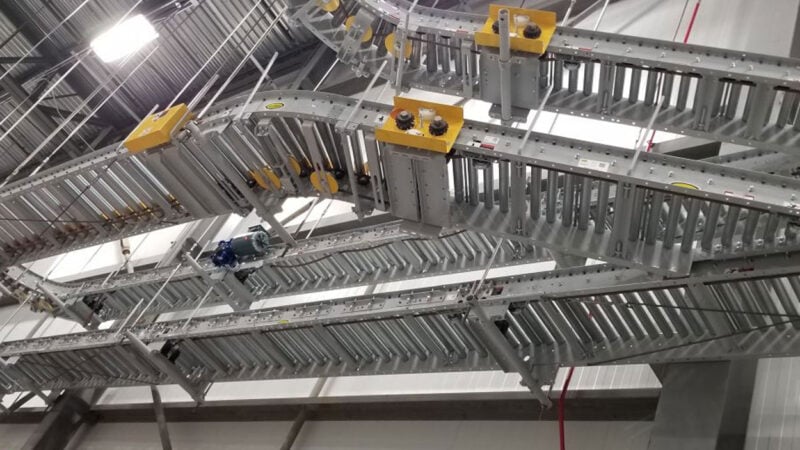
Hytrol overhead conveying connects the operations.
Hytrol supplied all case and pallet conveyors for the project. On the case-handling side, the system carried finished product from the new production building along an elevated overhead route to the robotic palletizing area.
Going overhead opens up a whole new tier for routing product, keeping your main floor clear for traffic and staging. Of course, it also means paying close attention to building structure, conveyor supports, transfer points, and maintenance access before the route gets locked in.
Tracking your product from the moment it leaves the production line all the way to its final staging spot provides the ideal starting point for a similar setup. Mapping that complete journey right out of the gate brings your building constraints and equipment interfaces together into one practical discussion.
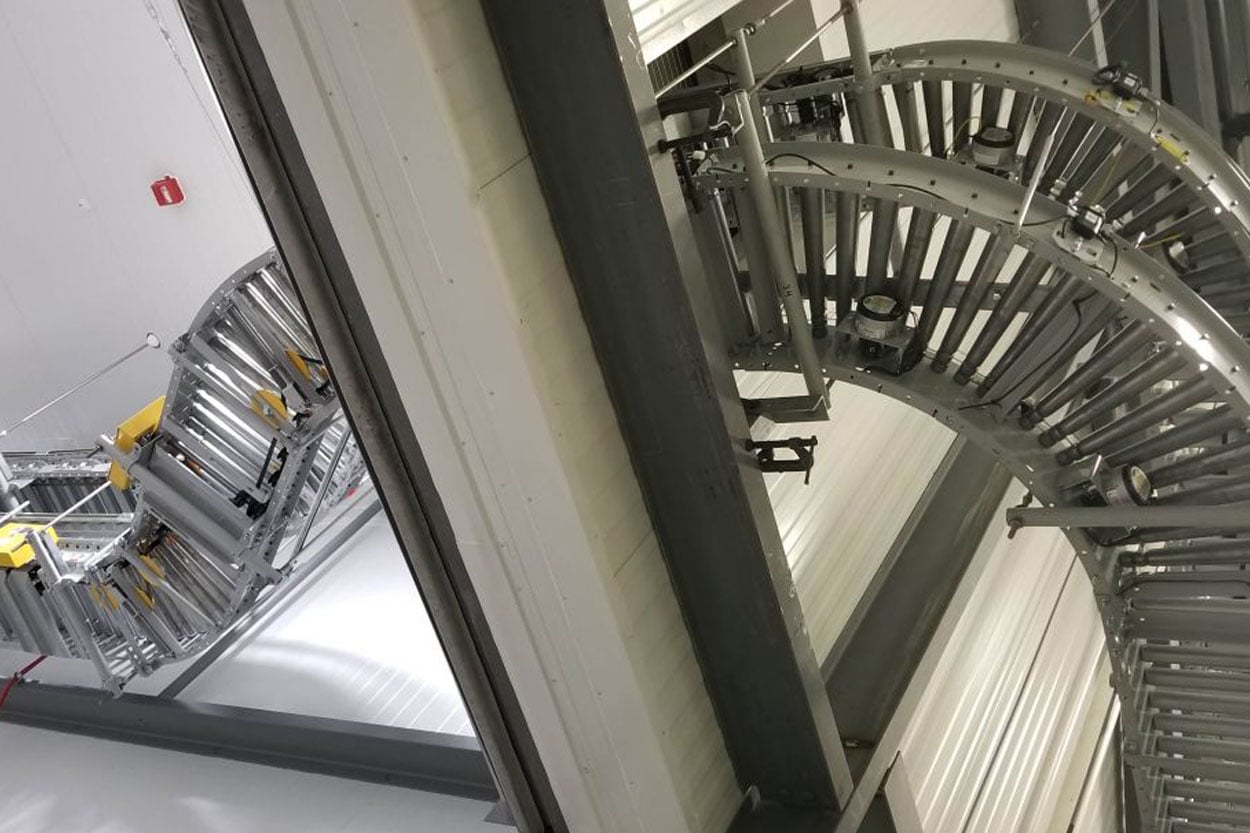
Six Ryson spiral conveyors provide vertical movement.
The system incorporated six vertical spiral conveyors from Ryson International. These units provided smooth elevation changes within the case conveyor route and connected the overhead handling arrangement with other parts of the process while preserving up to 75% of the floor space required by conventional incline belts.
Spiral conveyors carry product along a path that changes elevation around a central structure. Their suitability for an application depends on the product characteristics, required elevation change, and operating rate. Case dimensions and weight also belong in the equipment-selection discussion.
On this installation, those six spirals formed the real backbone of the vertical layout, keeping line speed steady and handing cases off seamlessly to the surrounding equipment. Factoring vertical movement into your system design from day one ensures your horizontal runs, spiral placements, and equipment handoffs all sync up cleanly with your production and palletizing goals.
Connecting case conveying with robotic palletizing.
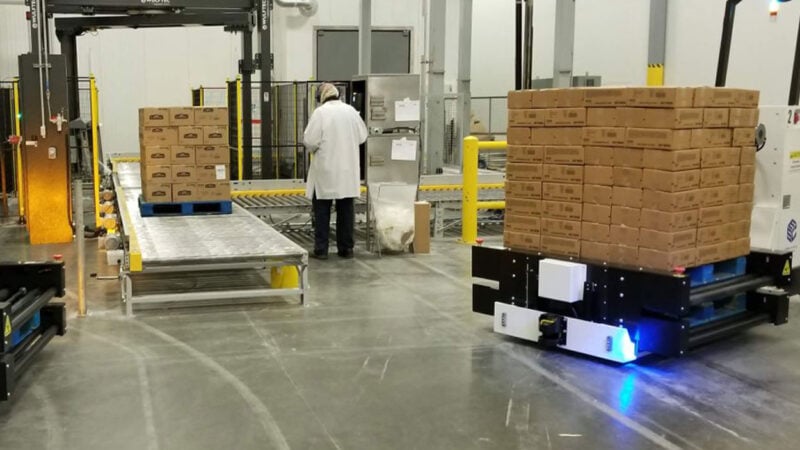
The case conveyor system delivered finished cases to the facility’s robotic palletizing equipment. At that point, the process shifted from moving individual packages to building pallet loads.
For robotic palletizing applications, the surrounding conveyor equipment plays an important role in presenting cases to the robot and moving completed loads onward. Case orientation, arrival conditions, spacing, and the pallet-building requirements inform the design of the handling interfaces.
Beyond that, your downstream flow makes or breaks the cell. Once a pallet is stacked, it has to clear the area right away so the robot never sits waiting, which is why factoring pallet conveying directly into the initial scope is so critical.
AEC handled that bridge seamlessly, tying the overhead case route directly into the takeaway lines that feed completed pallets straight toward wrapping.
Controls integration brings the handling stages together.
AEC’s integration work connected the conveyor system controls directly with robotic palletizing and automatic stretch wrapping.
The interfaces between equipment deserve the same attention as the mechanical route. MHI identifies coordination between robotic controllers and conveyor controls as a key consideration in integrated automation applications.
In a comparable system, the controls design needs to establish when equipment can accept product, when a transfer can proceed, and how the process responds to an interruption. Those operating conditions help define the communication required between adjoining stages.
Brad Pearson described the hands-on work behind this type of integration:
“Projects like this are why I enjoy material handling: understanding the full process, developing the layout, working through the interfaces, and helping bring the entire system together.”
This detail-driven mindset captures the core engineering of this project. AEC developed the layout around the facility’s product flow and coordinated the equipment interfaces along that path.
Result: Engineered touchless freezer route designed to deliver up to a 35% throughput boost.
From individual cases to finished pallet loads, AEC bridged the gap between new production capacity and freezer prep. By pairing Hytrol overhead conveying and Ryson spiral elevation with precision controls, the facility achieved an automated, touchless product route engineered to keep high-volume production moving without missing a beat.
Three major operational benchmarks were achieved:
- 100% touchless flow: Completely eliminated manual forklift staging and inter-building case transport.
- 75% floor space preservation: Retained critical ground-level staging and travel aisles through overhead runs and compact vertical spirals.
- 35% projected throughput boost: Modeled to deliver sustained end-of-line capacity increases by maintaining continuous line synchronization from case discharge through automatic stretch wrapping.
Are manual handling friction and transfer delays slowing down your production operations?
AEC specializes in engineering application-specific conveyor networks that eliminate manual transfer bottlenecks and reclaim floor space. Reach out today – we’ll work alongside your team to design an integrated route built for 100% touchless handling, line balance, and peak end-of-line throughput.

Meet the expert behind the project.
Brad Pearson, Engineer & Material Handling Specialist
See the system in action!


Let’s solve your challenge.
Since 1960, we’ve helped our clients solve complex challenges with smart, productivity-driven solutions in automation, material handling, and storage.
Tell us a bit about your project. Our team will follow up within 2 business days to explore how we can help you move faster, operate smarter, and get measurable results.