
Spiral Conveyor
Efficient vertical movement with space-saving spiral conveyor design.
Spiral up with vertical conveyor solutions.
Spiral conveyor systems can recover up to 60% more floor space compared to traditional conveyor layouts, making them ideal for space-constrained facilities. These systems deliver up to 35% faster throughput through a continuous-flow design that moves high volumes without bottlenecks.
Spiral systems also generate up to 25% in overall cost savings by reducing handling time and energy use, while supporting up to 40% higher system uptime through durable construction that minimizes maintenance requirements.


Experience the power of vertical conveyors.
Engineered for facilities where floor space is limited and efficient vertical movement is required, vertical spiral conveyors provide a compact solution for moving products between elevations. Their spiral design reduces the need for multiple conveyor runs, freeing up valuable workspace while maintaining smooth, continuous material flow.
Our conveyor specialists assess your operation and layout to recommend and integrate a solution that supports both current needs and future growth.
Resource hub.


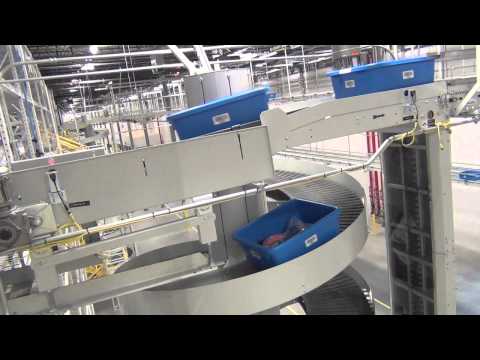
 Ryson Multiple Entry and Exit Spiral Conveyors at Distribution Center
 Related projects. Proof in action.
See how our team transforms equipment, planning, and integration into high-functioning, automated systems that solve real-world challenges.
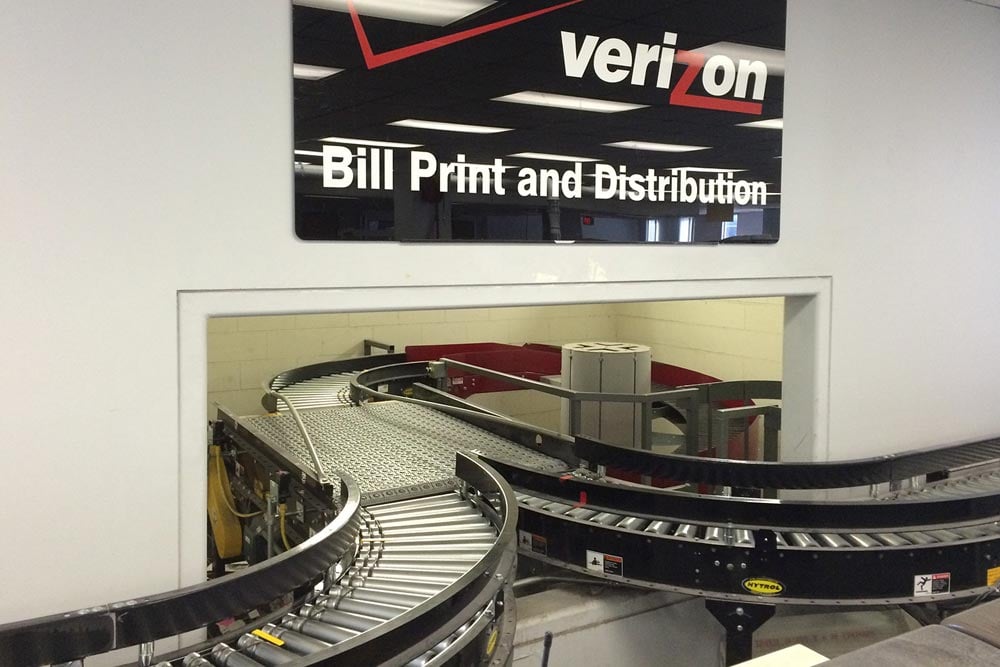

Vertical Conveyor FAQ
A vertical spiral conveyor is a type of vertical conveyor system designed to move products continuously between different elevations using a compact, spiral-shaped track. Instead of stopping and lifting items in batches, it carries products smoothly upward or downward in a continuous flow, making it ideal for high-throughput operations.
Vertical spiral conveyors are commonly used when floor space is limited and consistent product flow is required between levels, such as in manufacturing, packaging, and distribution facilities. Their spiral design reduces the need for long horizontal conveyor runs, minimizes congestion, and supports reliable movement of a wide range of product sizes while maintaining stability and efficiency.
A spiral conveyor system is built from several core components that work together to move products smoothly and continuously between elevations.
The exact configuration depends on throughput, product characteristics, and layout requirements, but most spiral conveyors include the following elements:
- Spiral belt or track – The continuous spiral belt or slat surface that carries products upward or downward in a controlled path.
- Center column or support structure – A rigid structural frame that supports the spiral track and maintains proper alignment throughout the vertical rise.
- Drive system – Includes motors, gearboxes, and drive assemblies that power the belt or slats and control conveyor speed.
- Infeed and discharge conveyors – Connect the spiral conveyor to upstream and downstream conveyor lines, ensuring smooth product transitions.
- Guides and side rails – Help maintain product stability and alignment as items travel through the spiral path.
- Controls and sensors – Monitor speed, product flow, and system status, allowing the spiral conveyor to integrate with broader automation and safety systems.
- Safety features – Such as guarding, emergency stops, and access points to protect operators and support compliant operation.
Spiral conveyors can be configured with several different belt options, each selected based on product characteristics, throughput requirements, sanitation needs, and operating environment. Common belt options include:
- Modular plastic belts – Durable, low-maintenance belts ideal for a wide range of products. They offer good traction, quiet operation, and are commonly used in packaging, distribution, and light manufacturing applications.
- Slat belts – Rigid slat-style belts designed for heavier loads or products requiring extra support. These belts provide stability and are well suited for industrial and pallet-adjacent applications.
- Friction-top belts – Belts with a high-friction surface that help prevent product slippage, especially on steep inclines or declines. Often used for lightweight or unstable items.
- Food-grade belts – FDA-compliant belts designed for washdown environments and sanitary operations. These are commonly used in food, beverage, and pharmaceutical facilities.
- Anti-static belts – Designed to dissipate static electricity, making them suitable for electronics, packaging, or environments where static control is critical.
- Low-noise belts – Engineered to reduce operational noise, often used in facilities where noise control is a priority.
Vertical spiral conveyors improve facility performance by moving products between elevations in a compact, continuous-flow design that maximizes space and efficiency. By shifting vertical transport into a small footprint, these systems reduce congestion, simplify layouts, and support higher throughput with minimal maintenance.
Key benefits include:
- 60% Space Optimization: Free up as much as 60% of your floor space, giving you more room to optimize operations and increase efficiency.
- 35% Increased Throughput: Boosts processing capacity by up to 30%, ensuring continuous, high-volume handling without bottlenecks.
- 25% Cost Savings: Lowers operational costs by as much as 25% through reduced handling time and energy efficiency features.
- 40% Enhanced Uptime: Minimizes maintenance needs, increasing system uptime by up to 40% for uninterrupted operations.
- Long-Term Durability: Built for heavy-duty performance, offering a reliable, efficient solution that supports sustained productivity.
- Flexible Integration: Can easily be integrated into existing automated systems, allowing for seamless interaction with other material handling equipment like sorters, scanners, and robotic arms.
Vertical spiral conveyors reduce operating costs by streamlining vertical material movement while minimizing labor, energy use, and maintenance requirements. Their compact, continuous-flow design improves efficiency without adding complexity, allowing facilities to move products between elevations reliably and with less manual intervention.
Cost-saving advantages include:
- Reduced Labor Costs: By automating vertical transport, spiral conveyors reduce the need for manual handling, resulting in lower labor expenses.
- Lower Maintenance Costs: With fewer moving parts and simplified mechanics, vertical spiral conveyors require less frequent maintenance compared to more complex conveyor systems, reducing downtime and repair costs.
- Energy Savings: The efficient design of these systems often results in lower energy consumption, helping facilities save on utility bills.
- Increased Productivity: By facilitating faster and more reliable product movement, these conveyors can significantly boost throughput and reduce operational bottlenecks, leading to improved profitability.
Spiral conveyor systems can be configured with a wide range of custom options to match specific operational, environmental, and performance requirements. These configurations allow each system to integrate smoothly into existing workflows while optimizing durability, efficiency, and throughput.
Common customization options include:
- Custom Belt Materials: Whether for hygienic or heavy-duty environments, specific materials such as food-grade plastics or robust metals are available.
- Adjustable Speed Control: Users can adjust conveyor speed to match production requirements, ensuring smooth integration with other operational systems.
- Height and Incline Adjustments: The spiral design allows for flexible height and incline configurations, ensuring that the conveyor fits within tight spaces or complex layouts.
- Side Guards and Covers: Optional guards and covers ensure product containment and reduce the risk of items falling off the conveyor, especially at higher speeds.
- Integration with Automated Systems: The conveyor can be integrated with other automated material handling systems, such as robots or automated storage and retrieval systems (AS/RS).
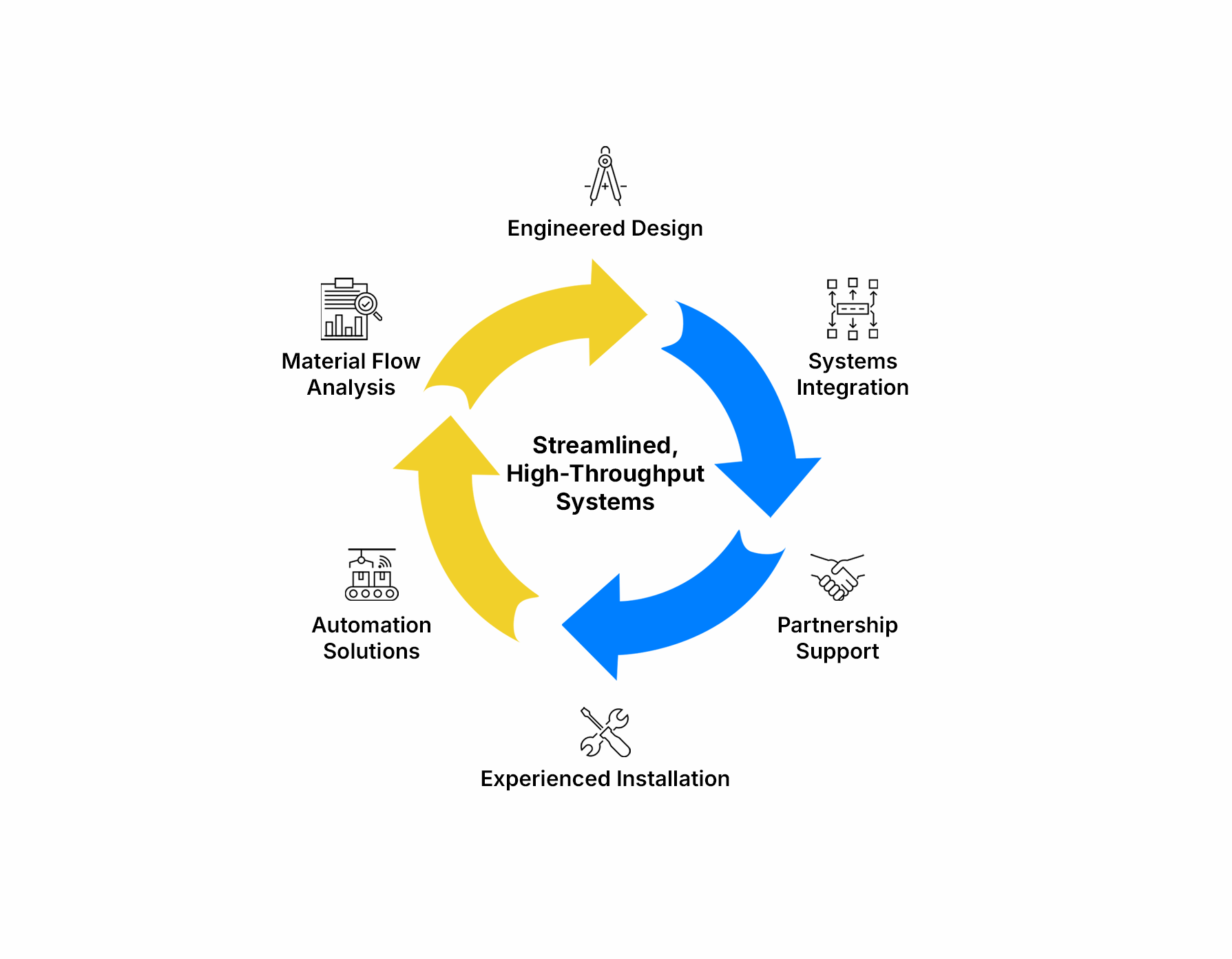
AEC designs vertical spiral conveyor systems as part of fully integrated material handling solutions, engineered to align with each facility’s workflow, automation strategy, and performance goals. Drawing on decades of experience since 1960, AEC connects proven automation technologies and trusted vendor equipment into cohesive systems that streamline operations and improve material flow.
Through custom system design, controls integration, and coordinated installation, AEC’s vertical spiral conveyor solutions maximize vertical space, increase productivity, and reduce labor demands. Ongoing support and system-level integration ensure each solution operates safely, reliably, and efficiently within the broader warehouse or manufacturing environment.
One Partner. Every Solution.
Full-service project management from concept to completion.
Experience the advantage of a single, trusted partner committed to your operational success.
Meet the people shaping the future of logistics.



Let’s solve your challenge.
For over 65 years, we’ve helped our clients solve complex challenges with smart, productivity-driven solutions in automation, material handling, and storage.
Tell us a bit about your project. Our team will follow up within 2 business days to explore how we can help you move faster, operate smarter, and get measurable results.