
Estimated reading time: 5 minutes
MDR technology provides a custom sortation solution with precision zone control and energy efficiency.
In many conveyor systems, the real performance difference does not come from mechanical design alone. It comes from how the system is controlled. When each section of conveyor can operate independently and only consume power when needed, the entire system becomes more efficient and easier to manage. That is the foundation of MDR-based sortation.
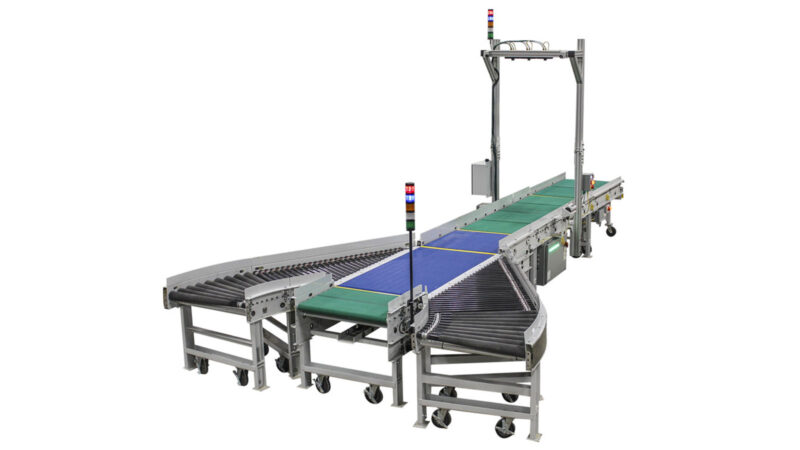
An MDR-based automated sorter conveyor uses motor-driven rollers to power and control individual zones. Instead of relying on centralized drives and complex mechanical diverts, each zone contains its own motor and logic. This creates a modular, scalable sortation system that is especially well suited for operations focused on flexibility, accumulation, and energy efficiency.
Executive Summary: MDR-based sortation utilizes decentralized 24V DC motor-driven rollers to create a modular, “run-on-demand” system that prioritizes energy efficiency and Zero Pressure Accumulation (ZPA). By shifting from centralized mechanical drives to independent zone logic, it offers a scalable solution for low-to-medium throughput environments – such as e-commerce and pharma – where reducing product damage and noise is more critical than peak sorting speed. This architecture allows for simplified maintenance and easy integration into existing layouts.
- What is an MDR-based sortation conveyor?
- How do MDR-based sorters work?
- What are the core advantages of MDR-based sorter systems?
- What are the primary applications and industries for MDR-based sorters?
- How do MDR systems compare to high-speed shoe or crossbelt sorters?
- What technical factors should be assessed before selecting an MDR sorter?
- What are the critical best practices for MDR zone logic and maintenance?
- Get started with sortation solutions
What is an MDR-based sortation conveyor?
An MDR-based sortation conveyor is an intelligent material handling system that utilizes 24V DC motor-driven rollers to provide decentralized, zone-level control for flexible product movement. MDR stands for motor-driven roller. In this type of conveyor, small motors are built directly into the rollers, allowing each zone to be independently powered and controlled so sections run only when product is present.
MDR zones can accumulate, release, and divert products based on programmed logic. Rather than forcing products through the system, MDR-based sorters allow items to move only when space is available downstream. This approach reduces pressure between products and creates a controlled, predictable flow.
How do MDR-based sorters work?
MDR-based sorters function through distributed zone logic and integrated sensors that automate product flow, accumulation, and diversion without centralized mechanical drives. Products enter the conveyor and move through individually controlled zones where sensors detect product presence to determine when to release or hold each item.
When a divert is required, the MDR system activates a divert module or transfer mechanism. Because the upstream zones can stop and hold product automatically, diverts occur without back pressure or product collision. Each zone works together with the zones before and after it, helping the conveyor adjust automatically as conditions change on the line.
What are the core advantages of MDR-based sorter systems?
The primary benefits of MDR-based sortation include Zero Pressure Accumulation (ZPA), modular scalability, and high energy efficiency due to its “run-on-demand” power model. This technology provides distinct advantages over traditional mechanically driven systems:
- Zero pressure accumulation: Products do not contact each other while waiting, reducing damage.
- Energy efficiency: Zones run only when product is present, lowering power consumption.
- Scalability: Additional zones can be added without redesigning the entire system.
- Quiet operation: Low-voltage DC motors are quieter than centralized drives.
- Simplified maintenance: Individual rollers can be replaced without shutting down long sections.
What are the primary applications and industries for MDR-based sorters?
MDR-based sorters are ideal for e-commerce, pharmaceutical, and manufacturing environments that require high-flexibility accumulation and gentle product handling at moderate throughput speeds. These systems are commonly used where control is a priority, such as:
- Pharmaceutical and medical distribution.
- Light manufacturing and kitting operations.
- E-commerce fulfillment with moderate throughput requirements.
- Accumulation zones feeding packing or shipping areas.
- Operations focused on reducing product contact and energy usage.
How do MDR systems compare to high-speed shoe or crossbelt sorters?
MDR systems are designed for low-to-medium speed applications focusing on precise accumulation logic, whereas shoe and crossbelt sorters are engineered for maximum throughput and high-volume distribution. Sliding shoe and crossbelt systems are designed for multi-destination sortation at high speeds.
Compared to narrow belt or pivot wheel sorters, MDR systems emphasize zone logic and zero pressure accumulation rather than purely mechanical divert methods. MDR sorters are often integrated as part of a broader automated sortation system rather than acting as the primary high-speed sorting mechanism.
What technical factors should be assessed before selecting an MDR sorter?
Critical assessment factors for selecting an MDR sorter include product weight specifications, zone-to-product length ratios, and WCS integration compatibility to ensure the system meets throughput goals. Before selecting a conveyor, facilities should evaluate:
- Product size and weight range.
- Desired accumulation strategy.
- Throughput expectations.
- Electrical infrastructure requirements.
- Control system integration and WCS compatibility.
- Maintenance staffing and spare parts planning.
What are the critical best practices for MDR zone logic and maintenance?
Optimizing MDR performance requires precise sensor alignment and matching zone lengths to product dimensions to maintain consistent timing and prevent system congestion. Proper zoning is critical; zone length should match product dimensions to maintain consistent accumulation and release.
Sensor placement and control programming should be carefully coordinated to avoid unintended gaps. Because MDR systems rely heavily on distributed electronics, clear labeling and organized wiring simplify troubleshooting and long-term maintenance.
Why choose an MDR-based sorter for your facility?
An MDR-based sorter conveyor provides a flexible and intelligent approach to controlled product flow by combining independent zone control with zero pressure accumulation to reduce energy use and product damage. These systems improve efficiency while reducing product contact, making them ideal for modern distribution.
For operations seeking scalable, modular sortation that prioritizes control over speed, MDR-based systems offer a practical and adaptable solution. AEC works with Omni Metalcraft to design and integrate these systems in a way that supports long-term operational performance.
Speak with a conveyor sortation specialist about sortation solutions that provide dependable control now and flexibility as your operation grows.
Partnering with AEC ensures maximum operational efficiency.
Over 65 years of providing conveyor solutions, AEC continues to be the leading sortation conveyor integrator in North and South Carolina.
AEC designs and integrates MDR-based sortation systems using Omni Metalcraft’s Atlantis Technologies Modular MDR Sorter to ensure maximum operational efficiency through expert system alignment. By aligning zone control strategy, accumulation logic, and downstream equipment requirements, AEC ensures MDR-based sorters are applied where intelligent control and energy efficiency deliver measurable value.
Written by AEC Director of Customer Engagement, Josh Hamrick